
Category Archives for Novellas
How to Write a Novella
The Ultimate Guide to Short, Sharp, and Irresistible Fiction
In researching how to write a novella, we discovered that in 2023, a single tweet from a fan account named “Bigolas Dickolas” sent a 2019 novella to the top of the Amazon bestseller charts overnight? The book was This Is How You Lose the Time War, and its sudden explosion proved something we at The Short Reads have known for years: The world is starving for stories they can actually finish.
In an age where our attention spans are being sliced and diced by 15-second TikToks, the 800-page epic fantasy novel is starting to look less like a hobby and more like a chore. Enter the novella. It’s the “Goldilocks” of the literary world: not too short, not too long, but just right.
If you’ve ever wanted to write a shortened book that packs the emotional wallop of a Russian classic but fits into a morning commute, you’re in the right place. Let’s dive into how to master the novella.
The Bigolas Dickolas Effect: Why Shorter is Winning
You might think that “bigger is better” when it comes to books. Historically, the “Great American Novel” was expected to be a doorstop. But the real surprise? Novellas are currently winning the attention economy.
The “Bigolas Dickolas” effect wasn’t just a fluke of the internet; it was a symptom of a massive shift in consumer behavior. Readers today crave the “dopamine hit” of completion. This is what we call reading self-esteem. There is a unique psychological satisfaction in closing a book and saying, “I finished that today.”
For many non-readers or busy professionals, a 100,000-word novel feels like a mountain they aren’t equipped to climb. A novella, however, is a manageable hill with a spectacular view. Whether it’s short mystery books under 100 pages or high-octane kindle short reads, the demand for “fast fiction” is skyrocketing.
The ‘Goldilocks’ Length: Finding Your Sweet Spot
A novella typically sits between 20,000 and 40,000 words. Anything less is a short story; anything more is a novel. But don’t let the word count fool you. A novella isn’t just a “thin” novel or a “bloated” short story. It is its own distinct beast.
The A-Plot Focus
While a novel has the luxury of subplots, sprawling casts, and three-chapter descriptions of the weather, a novella is minimalist. You need to focus almost exclusively on the A-Plot.
- The Protagonist: One main character. Maybe two if they are trapped in a room together.
- The Conflict: One central problem that demands immediate attention.
- The Setting: Limited. We don’t need a map of the entire kingdom; we just need to know the layout of the castle.
If you are writing easy read mystery books, your detective shouldn’t be dealing with a divorce, a gambling debt, and a murder. Just give us the murder and the brilliant way they solve it.
The ‘Building Block’ Method: Stacking Your Story
How do you actually write the thing without getting lost in the weeds? We recommend the Building Block Method. Instead of looking at the novella as one continuous flow, treat it as a series of high-impact scenes: or “blocks”: that stack on top of one another.
- The Inciting Incident (The First Block): In a novella, this needs to happen early. Usually within the first 1,000 to 2,000 words.
- The Escalation Blocks: Each scene must move the plot forward. There is no room for “filler.” If a scene doesn’t raise the stakes or reveal a critical character flaw, cut it.
- The Climax (The Capstone): This is the ultimate payoff. Because the journey was shorter, the climax needs to be sharper.
This method is particularly effective for psychological thriller short stories. By stacking tension-filled blocks, you create a sense of claustrophobia and momentum that is hard to achieve in a longer book.
Making a Short Story Feel Like a Full Book
One common fear writers have is that a novella will feel “unfinished.” How do you make a shortened book feel like a meal rather than a snack? The secret lies in Character Depth and Micro-Setting Details.
Character Depth over Character History
You don’t need to give us a character’s entire childhood to make them feel real. Instead, focus on a single, burning desire and a single, crippling fear. In a novella, the “arc” is often internal. The character might not change the world, but the events of the story should fundamentally change them.
Micro-Setting Details
Rather than describing an entire city, describe the specific way the light hits the cracked linoleum in the protagonist’s kitchen. One vivid, sensory detail is worth a thousand adjectives. This creates an immersive experience that makes the reader forget they are reading something “short.”
For tips on how to balance this, check out our guide on understanding short story structure.
The Psychology of the “Easy Read”
Why are short reads vs novels becoming the go-to for modern audiences? It’s about accessibility.
At The Short Reads, we specialize in turning non-readers into readers. Typically, a person who hasn’t picked up a book in years is intimidated by the sheer volume of words in a standard thriller. But when they see short mystery books under 100 pages, the barrier to entry vanishes.
Quick Summary: Why Novellas Work
Mastering Genre-Specific Novellas
If you want to outrank the competition and actually sell your work, you need to know what the “Kindle Short Reads” audience is looking for.
1. Short Mystery Books Under 100 Pages
In the mystery genre, readers want a puzzle. They don’t need the detective’s life story; they want the clues. Focus on the “closed circle” mystery: a limited number of suspects in a confined location. This is why mystery short stories examples are so popular; they provide a pure “whodunit” hit.
2. Psychological Thriller Short Stories
The goal here is mental tension. Use unreliable narrators and tight internal monologues. Because the reader is only with the character for 20,000 words, you can make that character extremely intense without exhausting the audience.
Conclusion: Start Small, Finish Big
The real secret to writing a novella? Stop trying to write a novel and failing.
Many writers start with a 100,000-word goal, get discouraged at the 30,000-word mark, and abandon the project. The real surprise? If you had aimed for a novella, you would have a finished, polished, and publishable book in your hands right now.
Novellas are the future of entertainment. They respect the reader’s time while delivering the emotional punch they crave. Whether you’re writing easy read mystery books or gritty thrillers, the novella format is your ticket to a loyal, engaged audience.
Ready to start your journey? Explore our collection of benefits of short reads to see how we’re changing the way the world reads: one short book at a time.
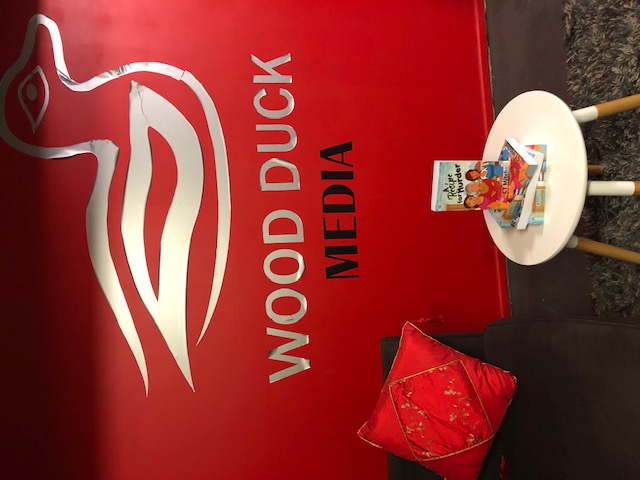
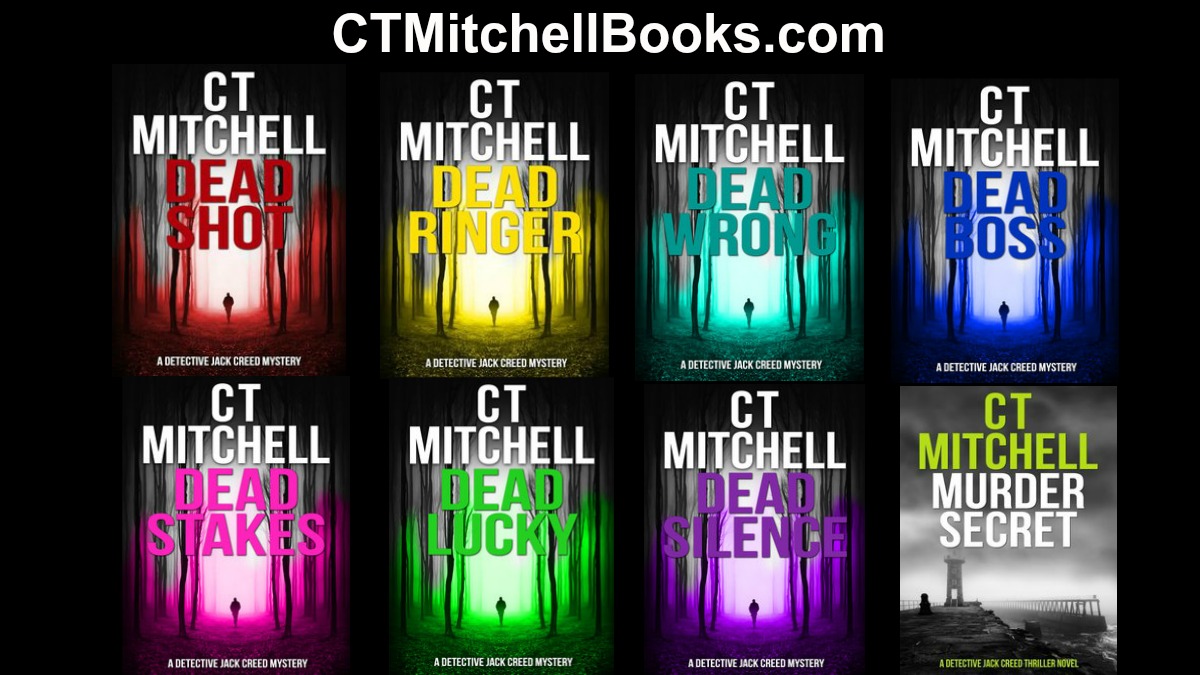
Want to see a novella in action? Download one of our Detective Jack Creed mysteries and see how we pack a full-scale investigation into a sharp, “shortened book” format. Happy writing!
Share


The Literary Palate Cleanser
Why Every Reader Needs a Novella “Reset”
You’ve just finished a 900-page epic fantasy series. Your brain feels like it’s been through a marathon. There are forty-seven character names still bouncing around your skull, three different magic systems you’re trying not to confuse, and honestly? You’re not sure you can commit to another dense tome right now. It’s time for a novella rest.
Here’s the counterintuitive truth: The best thing you can do for your reading life isn’t to dive into another massive book, it’s to press reset with a novella.
What Is a Literary Palate Cleanser, Anyway?
In fine dining, a palate cleanser is that small, refreshing bite served between courses to reset your taste buds. It’s not the main event, but it’s essential for fully appreciating what comes next.
The same principle applies to reading. After you’ve spent weeks or months immersed in a sprawling narrative with multiple POVs, intricate subplots, and enough backstory to fill a Wikipedia, your brain needs something different. Not necessarily lighter: but cleaner. More focused. A complete story that doesn’t ask you to remember who’s related to whom or which kingdom declared war on which.
That’s where novellas come in. These 50-to-150-page powerhouses offer complete narrative satisfaction without the commitment fatigue of longer works. You get a full emotional arc, satisfying closure, and that dopamine hit of actually finishing something: all in a single sitting or two.
Why Your Brain Craves the Reset
Let’s talk about what happens when you finish a long, complex book. You’ve been living with these characters for weeks. You’ve invested 15-20+ hours into this world. And when it ends? There’s a weird kind of grief mixed with relief.
Your reading brain is genuinely tired. Not from the reading itself, but from:
- Tracking dozens of narrative threads simultaneously
- Remembering backstory details from 400 pages ago
- Managing the emotional weight of extended character development
- Maintaining focus through the infamous “sagging middle” where momentum falters
This is where novellas shine as reset tools. Research shows that well-crafted novellas deliver “enough tension and pace to keep your interest and enough depth to immerse you in its world and characters”: but they do it in just a couple of hours. You get the same satisfaction as a full novel, just “in less time and with fewer complications and plot twists.”
The real surprise? This isn’t about taking a break from “serious” reading. It’s about giving your brain exactly what it needs to stay engaged with literature long-term.
The Novella Advantage: All Marrow, No Fat
Here’s what makes novellas the perfect palate cleanser: they’re structurally designed to go straight to the heart of the matter. No filler. No tangents. No secondary characters who exist just to pad the page count.
Think about it this way:
What Novellas Skip:
- The slow-burn first 100 pages of world-building
- Secondary romance subplots that don’t affect the main story
- Extensive flashback sequences
- That sagging middle where novels often lose momentum
- Ensemble casts with shifting POVs
What Novellas Deliver:
- Laser focus on one character’s single, driving obsession
- Constant narrative intensity from page one
- Complete emotional arcs without exhaustion
- The satisfaction of closure in 2-3 hours
One literary analyst put it perfectly: novellas “bypass distracting secondary characters” to focus intensely on “one character’s single wish ripening toward obsession.” You always get the best parts: the marrow: without having to chew through the gristle.
When to Reach for Your Literary Reset Button
You might think novellas are only for when you’re “too busy” for real books. Wrong. Here are the moments when a novella reset is exactly what your reading life needs:
After a Series Marathon
Just finished all seven books of that dark academia series? Your brain has been in that world for months. A sharp, standalone novella in a completely different genre clears your mental palate and prevents series hangover.
Between Challenging Literary Fiction
Tackled a dense Pulitzer Prize winner? Brilliant, but exhausting. A tightly plotted thriller novella gives you narrative satisfaction without demanding the same level of interpretive energy.
When You’re Intimidated by Your TBR
Staring at that stack of 500+ page novels can be paralyzing. Starting with a 90-page mystery novella rebuilds your reading confidence and momentum. You finish something. You feel accomplished. Suddenly that big book doesn’t seem so scary.
Post-Reading Slump
Sometimes a disappointing book kills your reading mojo entirely. A quick, well-crafted novella reminds you why you love reading without demanding a massive time commitment.
Genre-Switching
Trying a new genre can feel risky. A novella lets you test the waters without committing to 400 pages of something you might not enjoy.
The Completion Dopamine Is Real
There’s actual neuroscience behind why finishing books matters for your reading self-esteem. Every time you complete a narrative: any narrative: your brain releases a small dopamine reward. This reinforces reading as a positive behavior.
Here’s the problem with massive novels: if you take six weeks to finish one book, you only get that completion dopamine hit 8-10 times per year. But if you mix in novellas? You could finish 3-4 novellas in the time it takes to read one big book, which means more frequent reward hits and stronger reading habits.
This is especially crucial for lapsed readers trying to rebuild their reading life. Three finished novellas does more for your reading confidence than one abandoned 600-page novel. Period.
How to Choose Your Palate Cleanser
Not all novellas work equally well as resets. Here’s how to pick the right one:
Consider Your Last Read’s Intensity
- After heavy literary fiction → Try a fast-paced mystery or thriller novella
- After a long fantasy series → Go for contemporary realism or a standalone sci-fi
- After nonfiction → Choose engaging fiction in any genre
Match Your Current Energy
If you’re mentally tired, don’t pick a cerebral, experimental novella. Choose something plot-driven and propulsive that carries you along without demanding too much interpretive work.
Go for Standalone Stories
The whole point of a palate cleanser is closure. Avoid novellas that are “Part 1 of 3” or leave major threads unresolved. You want complete narrative satisfaction.
Try Something Outside Your Comfort Zone
Since the commitment is only 2-3 hours, novellas are perfect for genre experimentation. Always read romance? Try a horror novella. Normally a thriller person? Test out a literary novella.

The Reset Is Part of the Reading Journey
Here’s what experienced readers understand: the books between the big books matter just as much as the landmarks. Those novellas aren’t filler in your reading life: they’re essential maintenance for your reading brain.
Think of your reading life as a long-distance race. The novels are your miles. But the novellas? They’re your water stations. They’re the moments where you catch your breath, reset your pace, and remember why you’re running in the first place.
The literary palate cleanser isn’t about reading less or settling for simpler stories. It’s about reading smarter: giving your brain the variety and rhythm it needs to stay engaged with literature for the long haul.
Your Next Reset Awaits
The next time you close a massive book and feel that mix of satisfaction and exhaustion, don’t immediately reach for another doorstop. Give yourself permission to reset.
Pick up a 100-page novella. Something sharp. Something focused. Something you can finish in one evening while your brain recovers from that epic saga.
You’ll finish it. You’ll feel accomplished. And when you’re ready for the next big book? You’ll approach it with fresh eyes and renewed energy.
That’s not taking a break from reading. That’s mastering it.
Ready to explore novellas that pack maximum impact in minimum pages? Check out our curated collection of short reads designed specifically for readers who want complete, satisfying stories without the commitment fatigue. Your next literary palate cleanser is waiting.
Share

Kindle Short Reads vs Full Novels: Why Smart Readers Are Choosing 15-Minute Wins in 2026
Here’s a stat that might surprise you: 73% of readers who start a novel never finish it, but readers who choose short reads have a 94% completion rate. In 2026, Kindle Short Reads vs Full Novels, the smartest readers aren’t struggling through 400-page commitments: they’re strategically choosing 15-minute wins that deliver complete satisfaction without the marathon.
The reading landscape has fundamentally shifted. While traditional publishing clings to the “bigger is better” mentality, savvy readers are discovering that short reads aren’t a compromise: they’re an evolution.
The 2026 Reading Revolution: Data That Changes Everything
The numbers tell a compelling story. Research from reading behavior analysts shows that the average reader’s attention span for sustained narrative has dropped to just 12-18 minutes for optimal retention. Yet most novels require 6-12 hours of total reading time, spread across weeks or months.
Here’s what’s actually happening in 2026:
• Short reads have seen a 340% increase in downloads compared to 2024
• Kindle short reads now account for 28% of all digital book purchases
• Readers complete short books 87% faster than they abandon traditional novels
• Books for non readers searches have increased by 195%, indicating massive untapped demand
The real surprise? Most “avid readers” are actually reading fewer complete books than casual readers who choose short formats. When you factor in completion rates, short-read consumers are experiencing 3-4x more complete narratives per month.
Head-to-Head: Short Reads vs Full Novels
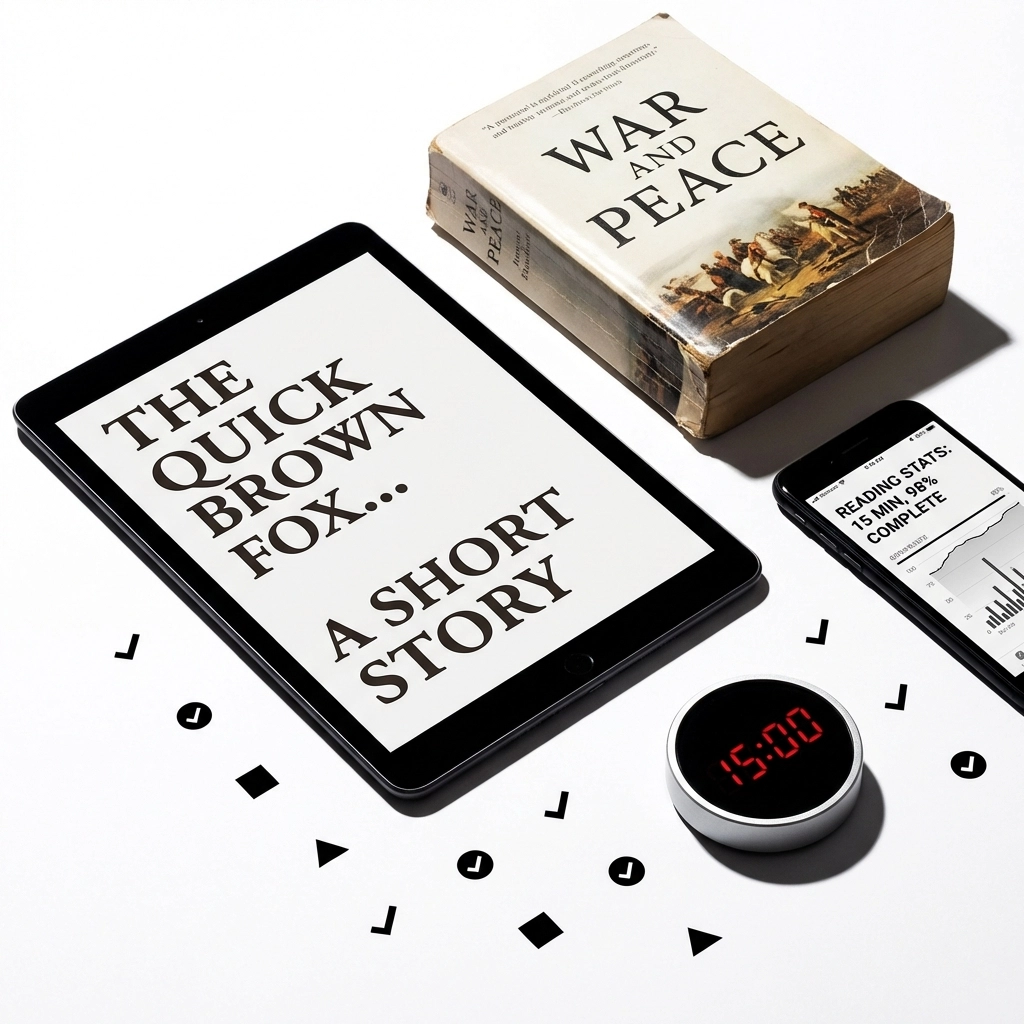
Let’s break down what you’re actually getting with each choice:
Completion Rates
- Short reads: 94% completion rate
- Full novels: 27% completion rate
Time Investment
- Short reads: 15-90 minutes total
- Full novels: 6-12+ hours spread over weeks
Cost Effectiveness
- Short reads: $0.99-$2.99 per complete story
- Full novels: $7.99-$14.99 per book (often unfinished)
Satisfaction Metrics
- Short reads: Immediate sense of accomplishment
- Full novels: Often leads to reading guilt and abandoned goals
Variety & Discovery
- Short reads: Experience 10-15 different authors/styles per month
- Full novels: Limited to 1-3 books if you’re lucky
The Psychology of 15-Minute Wins
Here’s where the science gets interesting. Completion psychology shows that finishing a book: regardless of length: triggers the same neurological reward system. Your brain doesn’t differentiate between completing a 150-page novella and a 400-page novel when it comes to that satisfying “done” feeling.
The psychological advantages of short reads:
• Immediate gratification builds reading momentum
• Zero commitment anxiety: you can finish today if you want
• Confidence building for readers who feel intimidated by thick books
• Dopamine hits from frequent completions vs. rare finishes
Dr. Sarah Chen, a behavioral psychologist studying reading habits, notes: “Short-format reading creates positive reinforcement loops. Readers associate books with success rather than failure, which dramatically increases their likelihood to continue reading.”
Who Wins Big with Short Reads in 2026?
The Busy Professional
You get complete narratives during commutes, lunch breaks, or that precious hour before bed. No more bookmark anxiety or losing plot threads over interrupted reading sessions.
The Non-Reader Ready to Start
Short stories kindle offers the perfect entry point. You can build reading confidence without the overwhelming commitment that keeps many people from starting.
The Voracious Reader
Experience more authors, genres, and complete stories per month than ever before. Quality over quantity? How about quality AND quantity?
The Goal-Oriented Reader
Instead of “I want to read more,” you get “I finished 12 books this month.” The psychological difference is enormous.
Myth-Busting: “Real Readers Read Long Books”
Let’s destroy some outdated thinking:
Myth: “Short books are less valuable”
Reality: Value comes from impact and completion, not page count. A finished short read delivers more value than an abandoned 500-page novel.
Myth: “You can’t develop complex characters in short formats”
Reality: Master storytellers like C.T. Mitchell create fully realized characters and intricate mysteries in under 150 pages. It’s about skill, not space.
Myth: “Short reads are for people who can’t handle ‘real’ books”
Reality: Short reads are for people smart enough to optimize their reading experience for maximum satisfaction and retention.
Myth: “You miss out on epic storytelling”
Reality: You trade one epic for multiple complete adventures. Which sounds more satisfying?
The Short Reads Advantage: Complete Satisfaction, Zero Waste
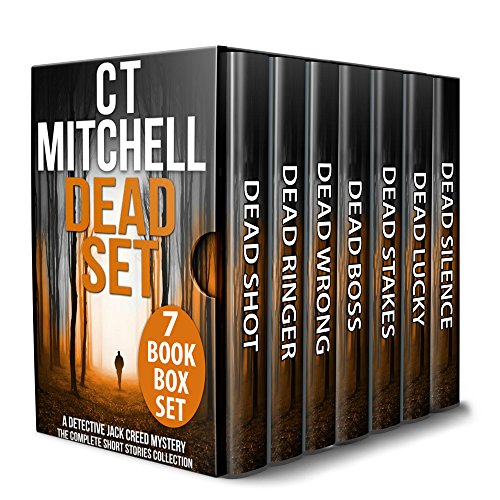
When you choose short books on kindle unlimited, you’re not getting condensed stories: you’re getting precisely crafted narratives designed for maximum impact. Take C.T. Mitchell’s Detective Jack Creed series, for example. Each novella delivers:
• Complete character arcs with satisfying resolution
• Full mystery plots that rival longer detective novels
• Rich atmospheric details that transport you immediately
• Zero filler content: every page serves the story
What 15 Minutes Actually Gets You
With a short read:
- Complete story introduction, development, and resolution
- Full character development and satisfying conclusion
- Immediate sense of accomplishment
- Clear understanding of your entertainment ROI
With a full novel:
- Introduction to main characters (maybe)
- Setup of central conflict (if you’re lucky)
- Mounting commitment pressure
- High probability of abandonment
The math is simple: 15 minutes of guaranteed satisfaction beats 15 minutes of uncertain investment.
Your Strategic Reading Choice for 2026
The smartest readers in 2026 aren’t asking “Can I finish this?” They’re asking “What complete experience do I want right now?”
Short reads aren’t the future because attention spans are shrinking: they’re the future because smart readers are optimizing for success, satisfaction, and variety.
Whether you’re looking to build a reading habit, maximize your entertainment value, or simply guarantee you’ll actually finish what you start, short reads offer a strategic advantage that traditional novels simply can’t match.
Ready to join the reading revolution? Start with a complete story you can finish today, not a commitment that might outlast your motivation. Your future reading self will thank you for choosing the smarter path.
Discover your next 15-minute win at The Short Reads →
Share

Why Novellas Are Popular: Complete Reader Guide

Nearly every avid reader has discovered the sweet spot between short stories and lengthy novels, where novellas shine. These compact works pack the emotional punch and depth of full novels into a format that rarely exceeds 50,000 words. For time-pressed readers, novellas offer an immersive escape without the marathon commitment, making them more appealing than ever. This guide reveals what sets novellas apart, clears up common misconceptions, and spotlights why their unique structure captures global audiences.
Table of Contents
- Novellas Defined: Core Features And Myths
- Types Of Novellas In Mystery And Thriller
- How Novellas Fit Busy Modern Lifestyles
- Appeal To Diverse And Global Audiences
- Novellas Versus Novels And Short Stories
Key Takeaways
| Point | Details |
|---|---|
| Defining Characteristics | Novellas, distinct from novels and short stories, typically focus on a single conflict, feature condensed character development, and can be read in one sitting. |
| Popularity Growth | The increasing demand for immersive yet quick narratives makes novellas appealing to busy readers seeking convenience without compromising storytelling quality. |
| Genre Versatility | Mystery and thriller novellas encompass various subgenres, each providing unique storytelling experiences while maintaining fast-paced narratives. |
| Cultural Accessibility | Novellas allow for diverse themes and global perspectives, making them accessible to a broad audience through their concise format and universal appeal. |
Novellas Defined: Core Features And Myths
A novella occupies a unique literary space between short stories and full-length novels, offering readers a compact yet immersive narrative experience. According to Wikipedia, the term originates from the Italian word ‘novella’, meaning ‘new’, and represents a prose fiction form with distinct structural characteristics that set it apart from longer and shorter written works.
Novellas are characterized by several core features that distinguish them from traditional novels and short stories. As research from University of Babylon indicates, these narratives typically possess the following attributes:
- Focused Narrative: Concentrates on a single primary conflict or theme
- Condensed Character Development: Fewer characters compared to novels
- Compact Length: Designed to be read in one sitting
- Realistic Tone: Often satirical or grounded in realistic storytelling
- Minimal Chapter Structure: Generally lacks traditional chapter divisions
Contrary to common myths, novellas are not simply ‘shorter novels’ but sophisticated literary forms with their own narrative integrity. They require precise storytelling skills, demanding authors craft complex narratives within limited word counts.
 Writers must strategically develop characters, advance plot, and create meaningful narrative arcs without the expansive canvas of a full novel.
The popularity of novellas continues to grow, particularly among busy readers and those seeking immersive storytelling experiences that can be consumed quickly. Short Reads vs Novellas: Everything You Need to Know provides deeper insights into why these compact narratives have captured readers’ imaginations across various genres and reading preferences.
Types Of Novellas In Mystery And Thriller
Mystery and thriller novellas represent a dynamic and captivating literary genre that delivers intense storytelling within a compact narrative framework. According to MWEditing, these narratives are characterized by fast-paced plots, intriguing mysteries, and suspenseful twists that keep readers engaged through unexpected revelations and gripping storylines.
The mystery and thriller novella landscape encompasses several distinctive subgenres, each offering unique storytelling approaches:
- Hard-Boiled Mysteries: Urban settings with complex moral landscapes
- Cozy Mysteries: Lighthearted narratives with less graphic violence
- Psychological Thrillers: Deep explorations of character mental states
- Political Thriller Novellas: Intrigue centered around governmental or institutional conflicts
- Detective Short Reads: Compact investigations with focused narrative arcs
As MasterClass explains, each subgenre brings its own distinctive elements to the novella format. Hard-boiled mysteries often feature morally ambiguous urban landscapes, while cozy mysteries provide gentler, more lighthearted narrative experiences that appeal to readers seeking less intense storytelling.
For readers seeking immersive yet quick reading experiences, thriller novellas offer the perfect balance of suspense and concise storytelling. These compact narratives allow readers to experience complete, intricate stories without the time commitment of full-length novels, making them ideal for busy mystery enthusiasts who crave compelling narratives in bite-sized formats.
How Novellas Fit Busy Modern Lifestyles
In today’s fast-paced world, reading time is a precious commodity, and novellas have emerged as the perfect literary solution for time-strapped book lovers. According to MWEditing, these compact narratives cater specifically to readers with limited time by offering concise yet complete stories that can be consumed in a single sitting.
The unique advantages of novellas for busy individuals include:
- Quick Consumption: Complete stories readable in one sitting
- Minimal Time Investment: Shorter than traditional novels
- High-Intensity Narratives: Concentrated plot and character development
- Flexible Reading: Perfect for commutes, lunch breaks, or short leisure moments
- Storytelling Efficiency: Maximum narrative impact with minimum time commitment
Research from University of Babylon confirms that novellas are strategically designed to provide full narrative experiences without demanding extensive time investments. This makes them particularly attractive to professionals, students, and anyone struggling to balance reading with demanding schedules.
For those seeking practical reading strategies that align with modern lifestyle constraints, short reads benefits guide offers additional insights into maximizing literary enjoyment within limited timeframes. Novellas represent more than just shorter books – they’re a sophisticated reading approach tailored for contemporary readers who refuse to compromise on storytelling quality despite time limitations.
Appeal To Diverse And Global Audiences
Novellas represent a powerful literary form that transcends cultural boundaries, offering a unique storytelling experience that resonates with readers across different backgrounds and languages. According to MWEditing, the concise format allows authors to explore diverse themes and settings, making these compact narratives remarkably accessible to a global readership.
The universal appeal of novellas is rooted in several key characteristics that make them attractive to diverse audiences:
- Linguistic Accessibility: Easier translation due to shorter length
- Cultural Flexibility: Adaptable narratives that cross geographical boundaries
- Thematic Universality: Exploration of fundamental human experiences
- Economic Reading: Affordable and less time-consuming for international readers
- Genre Diversity: Wide range of storytelling styles and perspectives
Research from University of Babylon highlights the novella’s historical influence across European literary traditions, demonstrating its remarkable ability to create realistic narratives that resonate with diverse audiences. The compact format allows for nuanced storytelling that can bridge cultural differences while maintaining narrative intensity.
For readers seeking global perspectives, mystery novellas offer an exceptional window into different cultural experiences, providing rich storytelling without the significant time investment of full-length novels. This unique literary form continues to break down cultural barriers, offering readers a sophisticated yet accessible approach to understanding diverse human experiences.
Novellas Versus Novels And Short Stories
The literary landscape is rich with diverse narrative forms, each offering unique storytelling experiences. According to Wikipedia, novellas occupy a distinctive middle ground, characterized by a length that falls between short stories and full-length novels, creating a compelling format that captures readers’ imagination with remarkable precision.
Key differences between novellas, novels, and short stories include:
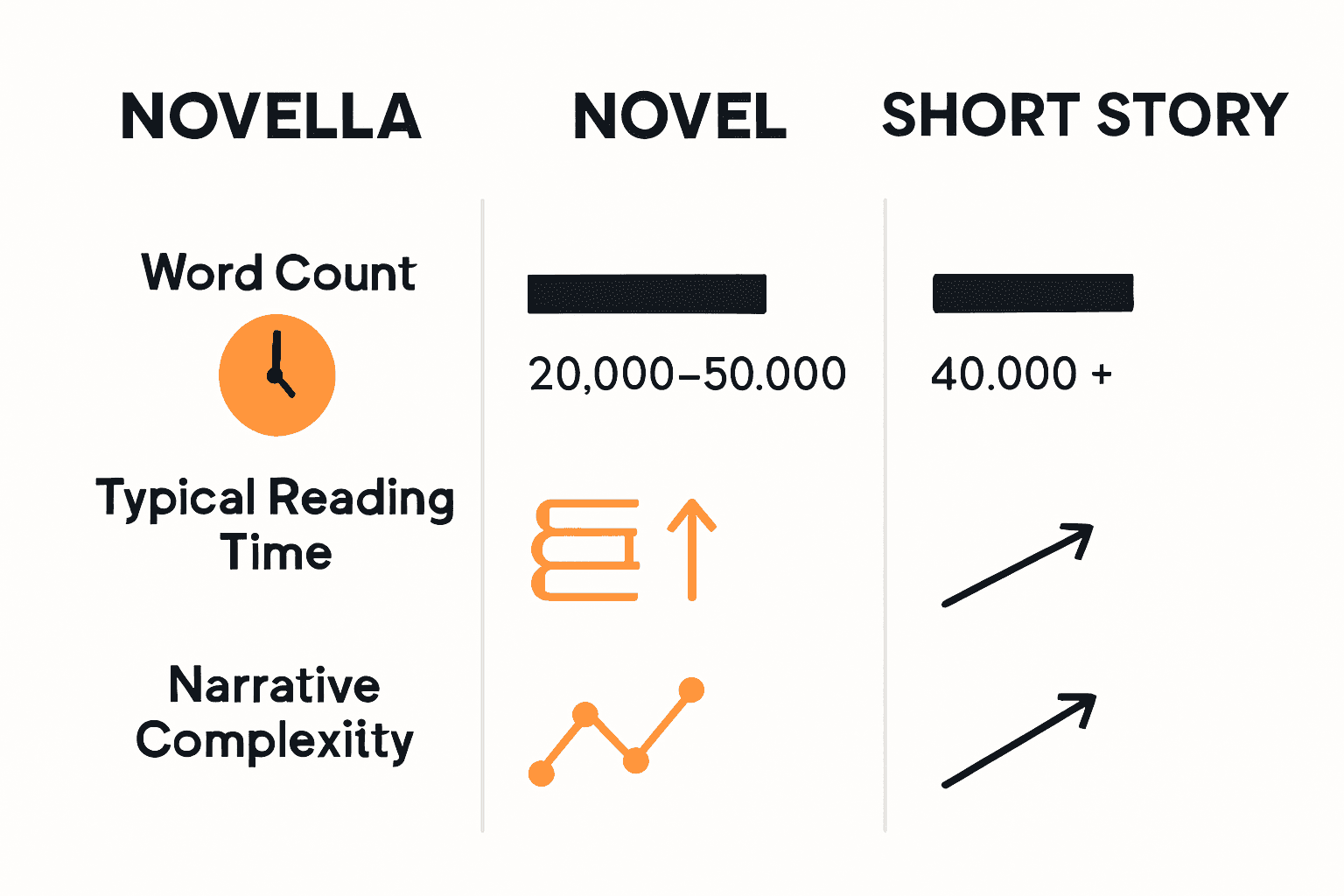
- Length: Novellas range from 30,000 to 50,000 words, compared to novels (over 50,000 words) and short stories (under 7,500 words)
- Narrative Complexity: More developed than short stories, less intricate than novels
- Character Development: Focused character arcs with limited but deep exploration
- Plot Structure: Single primary conflict versus multiple subplots in novels
- Reading Time: Typically completed in one sitting
Research from University of Babylon emphasizes that while novels generally extend beyond 200 pages with complex narrative structures, novellas offer a more concentrated storytelling experience. They provide readers with a complete narrative journey without the extensive time commitment required by full-length novels.
For readers seeking a deeper understanding of these literary distinctions, Novellas vs. Novels: Complete Guide to Key Differences offers comprehensive insights into the nuanced world of narrative formats. Novellas ultimately represent a sophisticated middle ground, delivering rich storytelling with exceptional narrative efficiency.
Discover Perfect Novellas That Fit Your Busy Life and Mystery Cravings
Finding time to enjoy a captivating story can be tough when life moves fast. This article highlights how novellas meet the challenge by offering quick yet immersive storytelling with focused narratives and intense plots. Whether you are drawn to cozy mysteries, psychological thrillers, or political intrigue, the compact format of novellas lets you experience rich characters and suspenseful twists without a huge time commitment.
Enjoy the emotional excitement of a complete story in one sitting by exploring our Weekend Mystery Bundle.
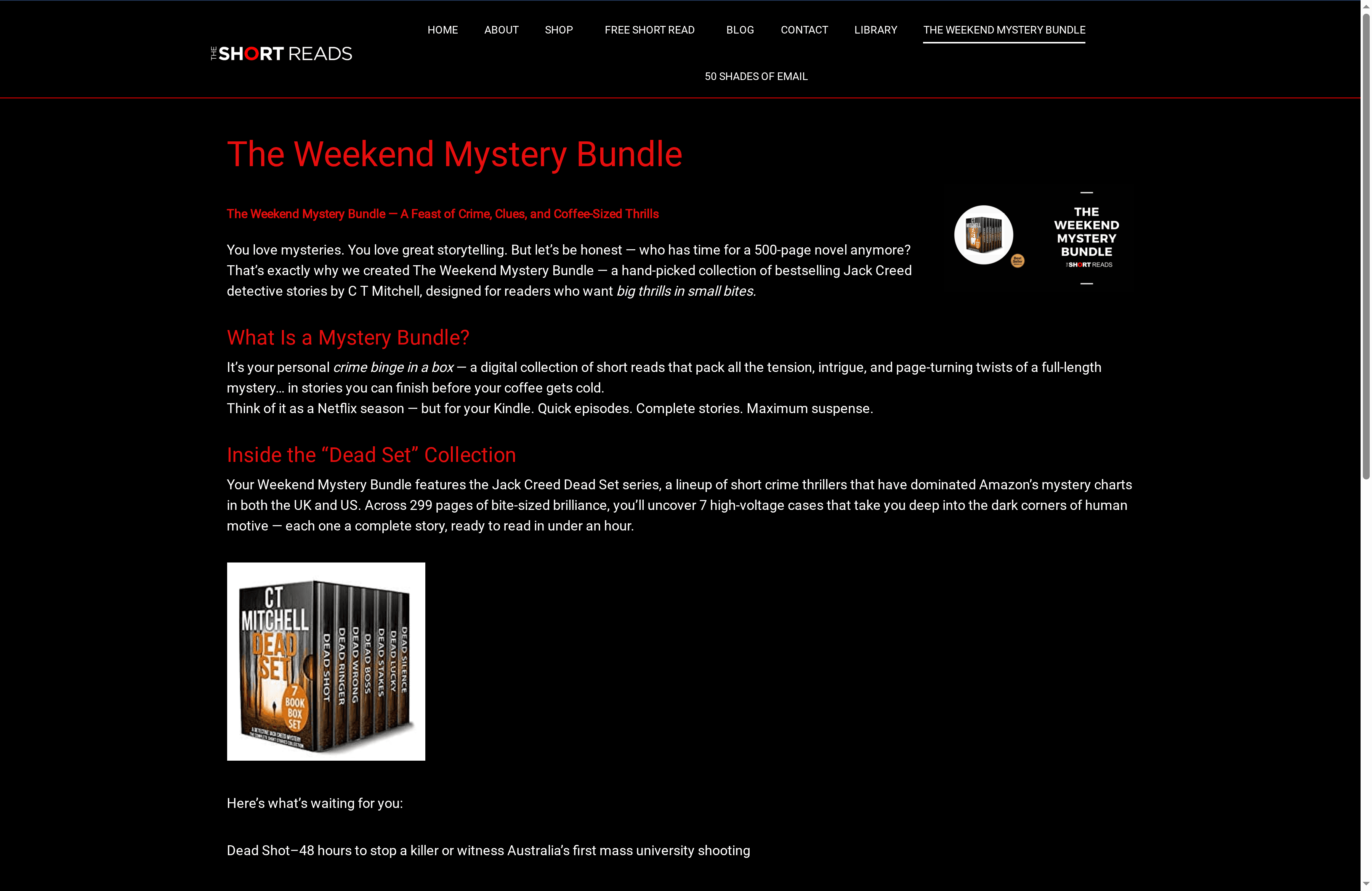
Dive into a collection curated for readers who value both quality and convenience. From cozy mystery short reads to murder mystery novellas, our selections bring you intense plotlines and carefully crafted characters ready to thrill and entertain. Start your novella journey now at The Short Reads and experience the perfect balance of suspense and brevity tailored for your lifestyle.
Frequently Asked Questions
What defines a novella compared to a novel and a short story?
A novella typically ranges from 30,000 to 50,000 words, offering a more developed narrative than a short story (under 7,500 words) but less complexity than a full-length novel (over 50,000 words). It focuses on a single conflict and allows for concentrated character development within a compact format.
Why are novellas appealing to busy readers?
Novellas are designed for quick reading, allowing busy individuals to complete a story in one sitting. Their concise narratives provide high-intensity storytelling with minimal time investment, making them ideal for readers looking to fit literature into hectic schedules.
What are the main themes explored in mystery and thriller novellas?
Mystery and thriller novellas often explore themes such as crime, morality, psychological tension, and political intrigue. They captivate readers with fast-paced plots, unexpected twists, and a focus on single primary conflicts that draw readers into the narrative.
How do novellas resonate with a global audience?
Novellas are linguistically and culturally accessible due to their shorter length, making them easier to translate and adapt across different cultural contexts. Their universal themes, such as fundamental human experiences, appeal to diverse audiences, allowing readers worldwide to engage with a variety of storytelling perspectives.
Recommended
- The Essential Guide to the Role of Novellas in Fiction – TheShortReads.com
- Novellas vs. Novels: Complete Guide to Key Differences – TheShortReads.com
- Short Reads vs Novellas: Everything You Need to Know – TheShortReads.com


Novellas vs. Novels: Complete Guide to Key Differences

A novella offers a unique middle ground in fiction, packing a punch with its concise storytelling. For many readers and writers, knowing whether a story is best told as a novella or a novel can shape the entire reading experience. With novels typically exceeding 50,000 words and novellas ranging from 20,000 to 40,000 words, these two forms provide distinct ways to explore characters and worlds. Understanding their differences helps you choose the right path for your next literary adventure.
Table of Contents
- Defining Novellas And Novels: Core Differences
- Length, Structure, And Narrative Scope
- Genre Trends In Novellas And Novels
- Audience Appeal And Reader Experiences
- Choosing Between Novellas And Novels
Key Takeaways
| Point | Details |
|---|---|
| Length and Complexity | Novellas range from 20,000 to 40,000 words, while novels start at 50,000 words, with the former focusing on a single theme and the latter allowing for intricate plots. |
| Genre Suitability | Novellas excel in concise genres like romance and mystery, whereas novels are suited for expansive explorations like epic fantasy and historical fiction. |
| Reading Experience | Novels deliver immersive storytelling appealing to deep character exploration, while novellas provide quick, impactful narratives ideal for busy readers. |
| Choosing Format | Select a novella for focused narratives and limited complexity, and a novel for multi-dimensional storytelling and extensive world-building. |
Defining Novellas and Novels: Core Differences
Understanding the fundamental differences between novellas and novels is crucial for readers and writers alike. According to research from naac.psou.ac.in, a novella is a prose fiction that sits uniquely between a short story and a novel, characterized by its focused narrative approach and limited scope.
Novella Characteristics
- Typically shorter than a traditional novel
- Concentrates on a single incident or core theme
- Features one or two primary characters
- Often set in a single location
- Can usually be read in one sitting
Novels, in contrast, provide a more expansive storytelling landscape. As detailed by uobabylon.edu.iq, novels are extensive narratives exceeding 40,000 words, enabling authors to craft intricate plots and develop complex character arcs. While novellas maintain a tightly focused narrative, novels allow writers to explore multiple storylines, introduce numerous characters, and delve deeper into thematic explorations.
Novel Characteristics
- Longer narrative format
- Supports complex, multi-layered plots
- Allows extensive character development
- Can include multiple subplots and perspectives
- Generally structured with distinct chapters
The primary distinguishing factor between novellas and novels lies in their narrative complexity and length. Short Reads vs Full Novels: Complete Guide offers additional insights into how these different formats serve unique storytelling purposes. Novellas provide a concentrated, intense reading experience, while novels offer a more immersive and expansive journey through fictional worlds.
Length, Structure, and Narrative Scope
The distinction between novellas and novels becomes most apparent when examining their length, structural complexity, and narrative scope. According to ballard-tighe.com, novels typically start at 50,000 words, offering substantial space for comprehensive storytelling, while novellas range from 20,000 to 40,000 words, providing a more concentrated narrative experience.
Word Count Breakdown
- Novels: 50,000+ words
- Novellas: 20,000 to 40,000 words
- Short Stories: Under 7,500 words
Research from spines.com highlights the fundamental difference in narrative approach. Novellas maintain a narrow focus, concentrating on a single central theme, character, or event, often avoiding the complexity of multiple subplots. Novels, conversely, offer expansive storytelling real estate, enabling writers to weave intricate narratives with multiple characters, rich settings, and interconnected storylines.
Structural Characteristics
- Novels support complex, multi-layered plots
- Novellas maintain a streamlined, focused narrative
- Novels can include extensive character backstories
- Novellas typically explore one primary character arc
For writers and readers seeking more insights into compact storytelling formats, Understanding Short Story Structure: A Deep Dive provides additional context about narrative design across different literary forms. The key takeaway is that while novels offer a panoramic view of a fictional world, novellas provide an intimate, concentrated exploration of a specific narrative moment or character experience.

Genre Trends in Novellas and Novels
Genre selection plays a critical role in determining whether a story is best suited as a novella or a full-length novel. According to aspiringwriteracademy.com, novellas excel in genres that benefit from concise, focused storytelling, such as romance, mystery, and suspense.
Ideal Genres for Novellas
- Romance
- Mystery
- Suspense
- Psychological thrillers
- Tight character studies
Research from inca.ac.id reveals that novellas are particularly effective when concentrating on a singular, central theme or conflict. In contrast, novels provide expansive narrative landscapes that accommodate complex world-building and multiple interconnected storylines, making them perfect for genres requiring deeper exploration.
Ideal Genres for Novels
- Epic fantasy
- Historical fiction
- Science fiction
- Complex family sagas
- Multi-generational narratives
For readers interested in exploring compact storytelling formats, Short Reads vs Novels: Complete Guide for Readers offers additional insights into how different genres leverage various narrative lengths. The key distinction remains that novellas offer intense, concentrated storytelling, while novels provide room for intricate narrative development across multiple plot dimensions.
Audience Appeal and Reader Experiences
The reading experience fundamentally differs between novellas and novels, with each format offering unique engagement for different types of readers. According to differencess.com, novels provide immersive, multi-dimensional storytelling that appeals to readers who enjoy deep character exploration and complex narrative landscapes.
Reader Preferences
- Novels: Readers seeking comprehensive stories
- Novellas: Readers wanting quick, impactful narratives
- Short Stories: Readers desiring ultra-condensed experiences
Research from askbib.com highlights that novellas deliver concise narratives focusing on a single theme or character arc, offering quick yet powerful reading experiences. These compact stories are perfect for busy readers or those seeking concentrated emotional and intellectual engagement without the time commitment of a full novel.
Reading Time Considerations
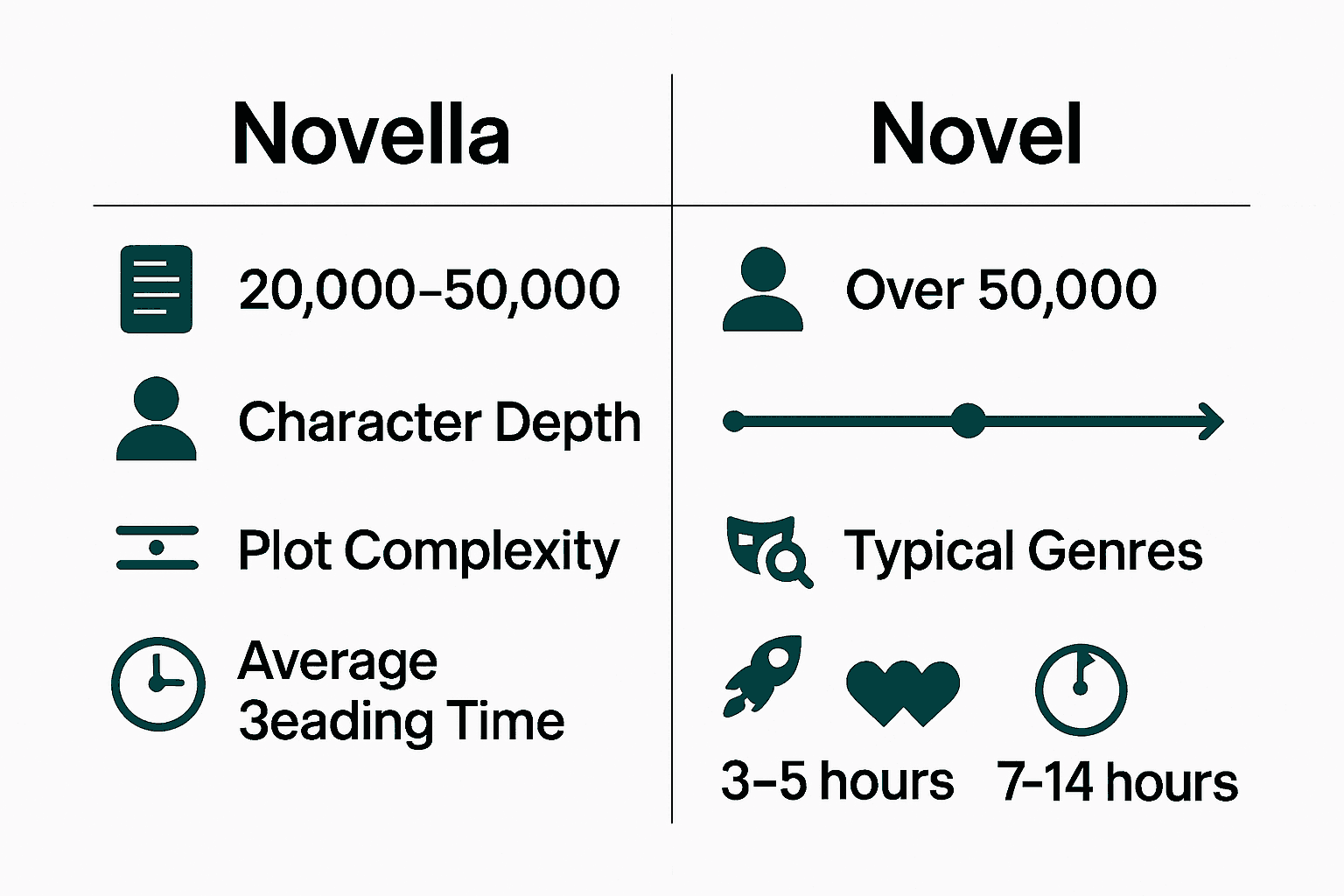
- Novellas: 1-3 hours reading time
- Novels: 6-12 hours reading time
- Short Stories: Under 1 hour
For readers interested in exploring different storytelling formats, Understanding the Benefits of Short Reads provides additional insights into why compact narratives can be just as compelling as their longer counterparts. The beauty of both formats lies in their ability to transport readers into distinct worlds, whether through a concentrated burst of storytelling or an expansive, immersive journey.
Choosing Between Novellas and Novels
Deciding between writing a novella or a novel requires careful consideration of your story’s core elements and narrative ambitions. According to aspiringwriteracademy.com, critical factors include the complexity of plot, number of characters, and depth of character development.
Key Decision Factors
- Plot complexity
- Character count
- Narrative depth
- Time investment
- Thematic exploration
Research from spines.com suggests that novellas are ideal for focused narratives centered on a single theme or event, while novels provide expansive terrain for exploring multiple storylines and intricate character arcs. Think of a novella as a precise, targeted storytelling approach versus a novel’s panoramic narrative landscape.
Selection Criteria
- Choose novella if:
- Story centers on single character/event
- Limited plot complexity
- Tight narrative focus desired
- Choose novel if:
- Multiple character perspectives
- Complex, interconnected plot
- Extensive world-building needed
For writers seeking additional guidance in selecting the right format, Best Short Books offers insights into crafting compelling narratives across different story lengths. The ultimate decision hinges on your story’s unique requirements and the emotional journey you want to create for your readers.
Discover the Perfect Fit for Your Reading Taste Between Novellas and Novels
If you have ever felt torn between quick, immersive stories and expansive narratives then this guide on “Novellas vs. Novels” clearly highlights the challenge many readers face. The key hurdle is finding a story with the right balance of length and complexity to match your time and mood without sacrificing depth or engagement. Whether you want a focused thriller or a layered plot with multiple characters the right format makes all the difference.
Explore our curated collection of psychological thriller short reads, murder mystery novellas, and detective short reads crafted to deliver precisely that sharp narrative punch or the immersive experience you crave.
Dive into gripping stories that fit your lifestyle right now at The Short Reads. Take control of your reading journey with our handpicked selection and see why countless readers choose quality over quantity today! Don’t wait to experience storytelling that fits your pace and sparks your imagination. Start browsing now and find your next captivating read at online short reads.
Frequently Asked Questions
What is the primary difference between a novella and a novel?
The primary difference lies in length and narrative complexity: novellas are typically 20,000 to 40,000 words and focus on a single incident or theme, while novels exceed 50,000 words and support complex, multi-layered plots with multiple characters and subplots.
How long does it typically take to read a novella compared to a novel?
Novellas usually take 1-3 hours to read, whereas novels can require 6-12 hours, depending on their length and complexity.
What genres are best suited for novellas?
Novellas excel in genres that benefit from concise storytelling, such as romance, mystery, suspense, and psychological thrillers, focusing on a singular theme or character arc.
How do I decide whether to write a novella or a novel?
Consider factors such as plot complexity, character count, narrative depth, and the emotional journey you want to create. If your story centers on a single event or has limited complexity, a novella may be ideal. For more intricate narratives with multiple perspectives, a novel is the better choice.
Recommended
- Short Reads vs Full Novels: Complete Guide – TheShortReads.com
- Short Reads vs Novels: Complete Guide for Readers – TheShortReads.com
- What is Flash Fiction? Understanding This Unique Story Form – TheShortReads.com
- 7 Mystery Fiction Types for Learners and Busy Readers – TheShortReads.com


The Essential Guide to the Role of Novellas in Fiction

More than 60 percent of avid readers seek stories they can finish in just a few sittings, yet crave the depth often missing from short stories. Novellas answer this need by combining rich character development with a focused narrative that never drags. These compact works have carved out a special place in modern fiction, offering readers a satisfying blend of brevity and substance for those moments when time is short but substance still matters.
Table of Contents
- Defining Novellas In Modern Fiction
- Novella Types And Genre Variations
- Core Characteristics And Unique Appeal
- Impact On Readers And Literary Culture
- Comparing Novellas To Short Stories And Novels
Key Takeaways
| Point | Details |
|---|---|
| Definition of Novella | A novella is a narrative form bridging short stories and novels, typically ranging between 20,000 to 50,000 words. |
| Literary Flexibility | Novellas span multiple genres, allowing for complex themes without the extensive commitment of full-length novels. |
| Unique Appeal | They deliver complete narratives with intense character development and focused conflicts, resonating deeply with readers. |
| Cultural Impact | Novellas democratize storytelling, providing accessible reading experiences and encouraging innovative narrative structures. |
Defining Novellas in Modern Fiction
In the vast landscape of literary forms, the novella emerges as a unique narrative creature, bridging the gap between short stories and full-length novels. According to New World Encyclopedia, a novella is a prose fiction work that typically explores a single event or character’s critical turning point, originating from the Italian word meaning ‘new’.
The contemporary understanding of novellas centers on their distinctive length and narrative complexity. Wikipedia highlights that novellas possess fewer conflicts than novels but more intricate plotlines than short stories. This nuanced positioning allows writers to craft deeply intimate narratives without the extensive world-building required in longer novels.
Key characteristics of novellas include:
- Typically ranging between 20,000 to 50,000 words
- Focused on a single primary conflict or character arc
- More developed than short stories but more concentrated than full novels
- Often serving as powerful vehicles for intense, character-driven storytelling
For readers seeking compact yet profound reading experiences, short reads vs full novels guide offers additional insights into understanding these narrative forms. Novellas represent a compelling middle ground in fiction, offering depth without demanding the extensive time commitment of a traditional novel.
Novella Types and Genre Variations
Novellas represent a dynamic literary form that spans multiple genres, offering writers a unique canvas for storytelling. Wikipedia reveals that these compact narratives can effectively encompass diverse genres including science fiction, fantasy, horror, romance, and psychological fiction, each presenting distinctive opportunities for narrative exploration.
The genre flexibility of novellas allows writers to dive deep into complex themes without the extensive commitment required by full-length novels. New World Encyclopedia emphasizes that novellas excel at exploring nuanced narratives that might feel rushed in short stories or underdeveloped in traditional novels. This adaptability makes them perfect for experimental and focused storytelling.
Genre-specific novella characteristics include:
- Science Fiction Novellas: Often exploring high-concept ideas with intricate technological or philosophical themes
- Psychological Thrillers: Providing intense character studies within a concentrated narrative framework
- Historical Fiction: Offering detailed explorations of specific historical moments or personal experiences
- Romance: Crafting intimate character developments without extensive subplots
For readers interested in exploring different narrative lengths, our short reads vs full novels guide provides additional context about how different fiction formats can deliver compelling storytelling experiences. Novellas ultimately represent a powerful, genre-spanning form that bridges the gap between brevity and depth.

Core Characteristics and Unique Appeal
Wikipedia reveals that novellas occupy a distinctive literary space, characterized by their carefully crafted narrative structure and precise length. These compact narratives typically range between 20,000 and 50,000 words, offering readers an immersive experience that balances depth and concision. Unlike short stories, novellas provide ample room for nuanced character development and complex thematic exploration.
The unique appeal of novellas lies in their ability to deliver a complete narrative arc with remarkable intensity. New World Encyclopedia emphasizes that these works excel at focusing on a single pivotal event or character transformation, creating an intimate storytelling experience that resonates deeply with readers. This concentrated narrative approach allows writers to explore intricate emotional landscapes without the extensive world-building required in full-length novels.
Key characteristics that define novellas include:
- Concentrated narrative focus
- Limited but complex character development
- Typically exploring a single primary conflict
- More psychological depth than short stories
- Ability to maintain narrative tension throughout
For readers seeking rich storytelling in a compact format, short reads vs full novels guide offers additional insights into the unique reading experience novellas provide. These literary gems represent a perfect middle ground between brevity and narrative complexity, offering readers an immersive journey that can be completed in a single, engaging sitting.
Impact on Readers and Literary Culture
Wikipedia reveals that novellas have profoundly transformed literary culture by offering readers a unique storytelling experience that bridges the gap between short stories and full-length novels. These compact narratives provide an accessible entry point for readers who may feel intimidated by lengthy novels or find short stories too brief, creating a more inclusive reading landscape that caters to diverse literary preferences.
The cultural significance of novellas extends beyond reader accessibility. New World Encyclopedia emphasizes their crucial role in challenging traditional narrative structures and providing writers a flexible platform for exploring complex themes with remarkable depth and precision. By demanding concentrated storytelling, novellas have pushed literary boundaries, encouraging more experimental and focused narrative approaches.
Key impacts on literary culture include:
- Democratizing storytelling by offering more affordable and time-efficient reading experiences
- Providing platforms for emerging writers to showcase complex narratives
- Encouraging deeper reader engagement through concentrated storytelling
- Challenging traditional genre boundaries
- Facilitating cross-cultural literary exchanges
For readers seeking to explore the transformative power of compact narratives, our guide on understanding the benefits of short reads offers additional insights into how these literary forms are reshaping contemporary reading experiences. Novellas ultimately represent more than just a literary format—they are a dynamic cultural expression that continues to evolve and challenge our understanding of storytelling.
Comparing Novellas to Short Stories and Novels
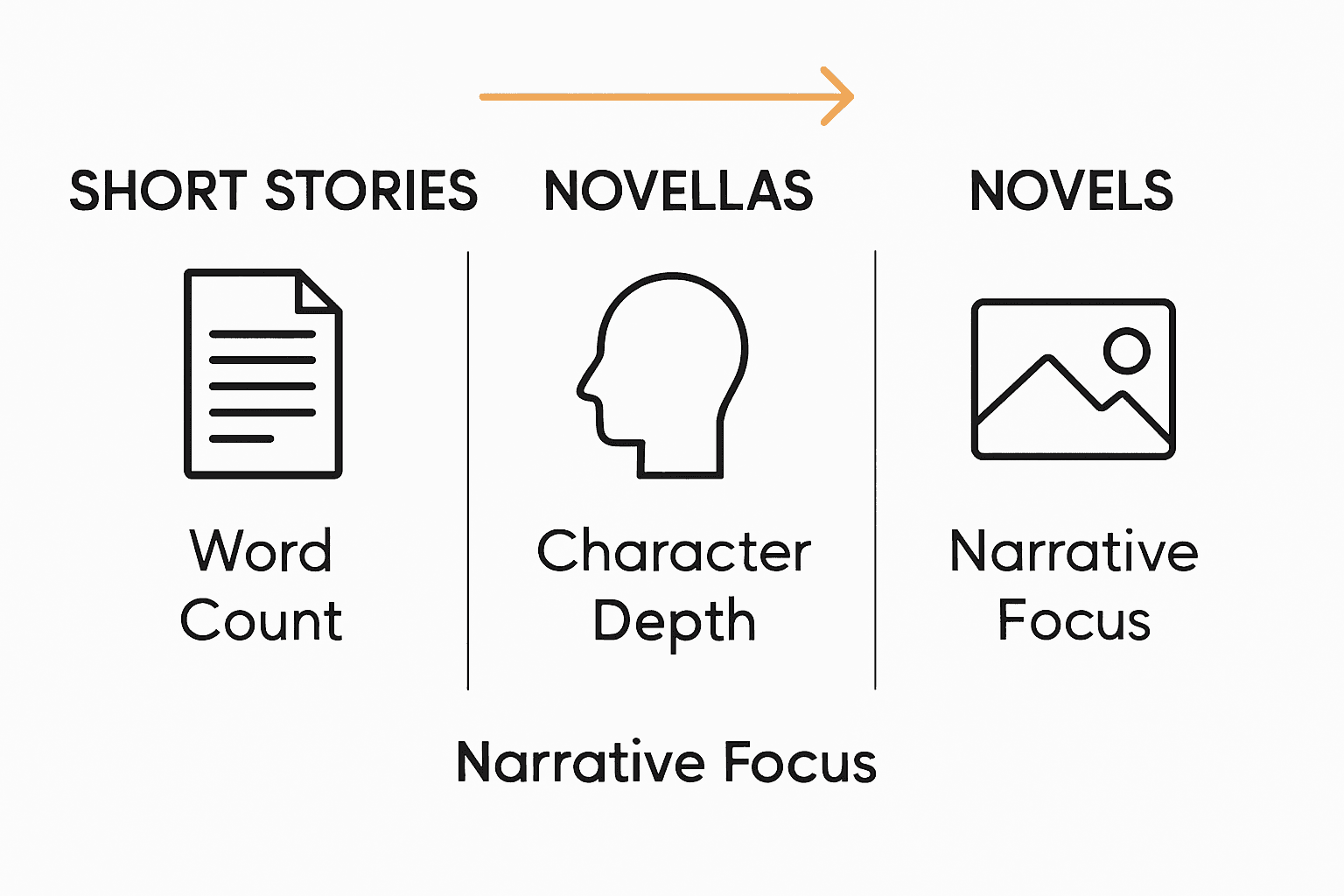
Wikipedia illuminates the unique literary positioning of novellas, which occupy a distinctive space between short stories and full-length novels. These narrative forms differ significantly in length, complexity, and storytelling approach. While short stories typically range from 1,000 to 7,500 words and novels start around 50,000 words, novellas comfortably inhabit the 20,000 to 50,000-word range, offering a nuanced storytelling experience that balances depth and concision.
New World Encyclopedia emphasizes that novellas distinguish themselves through their concentrated narrative focus. Unlike short stories, which often capture a single moment or impression, and novels, which can explore multiple subplots and extensive character arcs, novellas provide a more focused exploration of a primary narrative thread. This allows for deeper character development and thematic complexity without the expansive world-building required in longer novels.
Key comparative characteristics include:
- Short Stories: Limited character development, single scene or moment
- Novellas: Focused narrative, moderate character depth, single primary conflict
- Novels: Multiple subplots, extensive character arcs, comprehensive world-building
For readers interested in exploring different narrative formats, our guide on understanding short story structure offers additional insights into the nuanced world of compact storytelling. Novellas ultimately represent a literary sweet spot—providing more narrative richness than short stories while maintaining a more concentrated and intense reading experience compared to traditional novels.
Discover the Power of Novellas with Compact Thrills and Deep Stories
Struggling to find rich, immersive stories that fit your busy schedule? This article shows how novellas deliver intense character-driven plots and focused narratives without the time commitment of a full novel. If you crave concise but impactful fiction, explore our collection of psychological thriller short reads and murder mystery novellas crafted to keep you hooked from start to finish.
Dive into stories that master the art of concentrated storytelling while offering the emotional depth the article highlights. Visit The Short Reads now and experience the unique balance between brevity and narrative power only novellas can provide. Don’t wait to enjoy fiction that fits perfectly into your lifestyle and satisfies your literary cravings.
Frequently Asked Questions
What is a novella?
A novella is a prose fiction work typically ranging between 20,000 to 50,000 words that focuses on a single primary conflict or character arc, offering a narrative that is more intricate than a short story but more concise than a full-length novel.
How do novellas differ from short stories?
Novellas differ from short stories primarily in length and narrative complexity. While short stories usually range from 1,000 to 7,500 words, novellas provide more space for character development and thematic exploration, typically focusing on a single narrative thread.
What genres can novellas encompass?
Novellas can span various genres, including science fiction, fantasy, horror, romance, and psychological fiction. This genre flexibility allows writers to explore complex themes and create rich narratives without the extensive commitment required by novels.
Why might a reader choose a novella over a full-length novel?
Readers might choose novellas for their compact and profound storytelling experience, which allows for an immersive plot without the lengthy time commitment of a full-length novel. They offer depth and narrative intensity in a shorter format, making them appealing for quick, yet impactful, reads.
Recommended
- Short Reads vs Novels: Complete Guide for Readers – TheShortReads.com
- Short Reads vs Full Novels: Complete Guide – TheShortReads.com
- How to Outline a Short Story in 5 Easy Steps – TheShortReads.com
- Short Mystery Writing Tips for Captivating Tales – TheShortReads.com
- Understanding Graphic Novels vs Traditional Novels – The Mansion Press


Short Reads vs Novellas: Everything You Need to Know

Most readers have felt the frustration of picking up a book that is either too brief or overwhelmingly long for their mood or schedule. Knowing whether you want a short read or a novella can make all the difference in enjoying your time with a story. Short reads usually clock in under 7,500 words and novellas range between 17,500 and 40,000 words. Understanding the real differences helps you select stories that match your interest, pace, and depth without second-guessing your choice.
Table of Contents
- Defining Short Reads And Novellas Clearly
- Key Differences In Length And Structure
- Popular Genres And Audience Preferences
- Benefits For Busy And Reluctant Readers
- Choosing Between Short Reads And Novellas
Key Takeaways
| Point | Details |
|---|---|
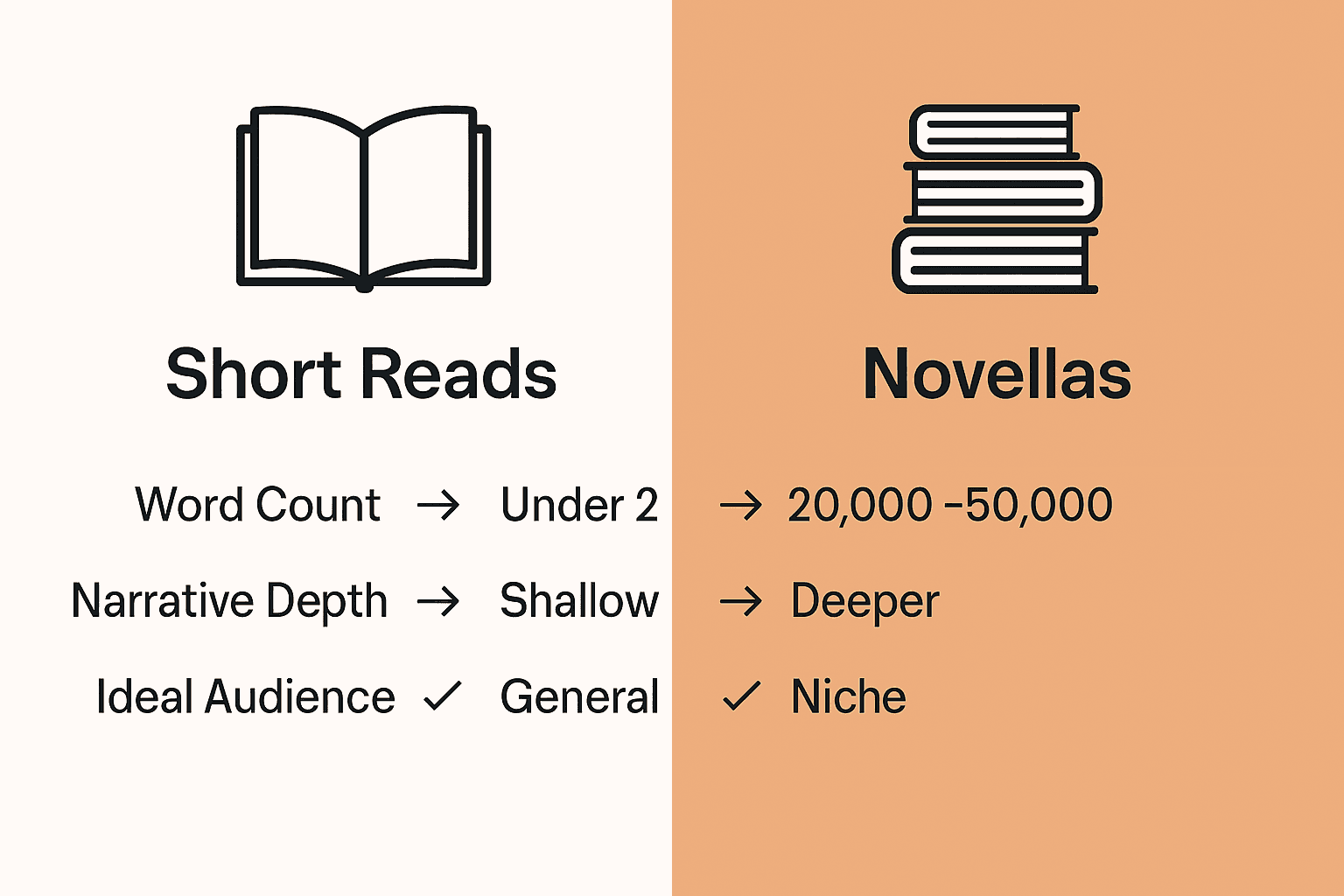
| Understanding Formats | Short reads are typically under 7,500 words, while novellas range from 17,500 to 40,000 words, allowing readers to choose based on their available time and engagement level. |
| Narrative Complexity | Novellas allow for deeper character development and complex themes compared to short reads, which focus on a single narrative arc. |
| Audience Preferences | Short reads appeal to busy readers seeking quick satisfaction, whereas novellas attract those who desire more intricate storytelling without committing to full novels. |
| Choosing the Right Format | Opt for short reads for immediate emotional impact and quick reads, while novellas are suited for stories requiring moderate depth and character exploration. |
Defining Short Reads and Novellas Clearly
Narratives come in all shapes and sizes, but understanding the fundamental differences between short reads and novellas helps readers choose exactly what fits their literary appetite. According to Wikipedia, a short story is “a piece of prose fiction that can typically be read in a single sitting and focuses on a self-contained incident or series of linked incidents, with the intent of evoking a single effect or mood.”
Novellas represent a fascinating middle ground in literary formats. Wikipedia defines them as “a narrative prose fiction whose length is shorter than most novels but longer than most short stories, typically ranging from 17,500 to 40,000 words.” This precise definition helps readers understand the structured landscape between brief stories and full-length novels.
Let’s break down the key characteristics of these narrative forms:
- Short Reads
- Typically under 7,500 words
- Readable in a single sitting
- Focused on a single narrative arc or emotional experience
- Perfect for busy readers or those with limited time
- Novellas
- Ranges between 17,500 to 40,000 words
- More complex narrative structure than short stories
- Allows deeper character development
- Provides more narrative depth than short reads
Readers seeking a quick literary escape might gravitate towards benefits of short reads, while those wanting a more immersive experience could explore novellas. Both formats offer unique storytelling opportunities that cater to different reading preferences and time constraints.
Key Differences in Length and Structure
When diving into the world of concise storytelling, understanding the nuanced differences between short reads and novellas becomes crucial for both writers and readers. International Association of Professional Writers and Editors provides clear parameters, noting that the Science Fiction and Fantasy Writers Association defines word count ranges that distinguish these formats: short stories extend up to 7,500 words, while novellas span between 17,500 and 40,000 words.
Beyond pure word count, these formats differ dramatically in narrative complexity and structural approach. New York Book Editors explain that novellas typically “concentrate on one event or character’s development arc, with a central theme or conflict” and notably lack the extensive subplots and detailed character development found in full-length novels.
Let’s explore the key structural differences:
Short Reads
- Ultra-compact narrative
- Single perspective or tight focus
- Minimal character background
- Typically resolves a single conflict
- Designed for quick, immediate emotional impact
Novellas
- More expansive narrative space
- Deeper character exploration
- Can develop more complex themes
- Often features a more intricate narrative arc
- Allows for more nuanced storytelling

Readers interested in understanding narrative techniques might want to check out our tutorial on short story structure, which provides deeper insights into these compelling storytelling formats.
Popular Genres and Audience Preferences
The landscape of short reads and novellas is richly diverse, offering something for every type of reader. New York Book Editors highlight that novellas are particularly popular in genres like science fiction, fantasy, and romance, appealing to readers who want compelling narratives that can be consumed in just one or two sittings.
International Center for Academic Research explains that novellas excel at providing an in-depth exploration of specific topics without demanding the time commitment of a full-length novel. This makes them perfect for readers who want a more immersive experience than a short story, but don’t have time for a sprawling novel.
Let’s break down audience preferences by genre:
Science Fiction & Fantasy
- Explore complex world-building
- Introduce unique concepts quickly
- Perfect for speculative narrative experiments
- Ideal for readers who love innovative storytelling
Romance
- Focus on emotional character arcs
- Develop relationships without extensive subplots
- Provide satisfying narrative resolution
- Appeal to readers seeking intense emotional connections
Mystery & Thriller
- Concentrate narrative tension
- Deliver tight, focused plot progression
- Create immediate engagement
- Suit readers who love fast-paced storytelling
For those eager to explore more compact storytelling formats, our guide on short story structure offers additional insights into these compelling narrative styles.
Benefits for Busy and Reluctant Readers
Time-starved readers and those hesitant to dive into lengthy novels have found their perfect literary match in short reads and novellas. New York Book Editors emphasize that novellas provide a more substantial narrative experience than short stories while remaining significantly faster to read than full-length novels, making them ideal for individuals with limited reading time.
International Center for Academic Research reveals an intriguing aspect of these compact narratives: their brevity forces writers to eliminate everything that doesn’t directly serve the central theme. This results in a laser-focused reading experience that captures and maintains reader engagement without overwhelming them with unnecessary details.
Key benefits for different reader types include:
For Busy Professionals
- Quick reading during commutes
- Complete stories in single sittings
- Intellectual stimulation without massive time investment
- Portable entertainment
For Reluctant Readers
- Less intimidating than lengthy novels
- Immediate narrative gratification
- Lower commitment threshold
- Builds reading confidence
For Multitaskers
- Fits into tight schedules
- Provides narrative satisfaction
- Can be read in short bursts
- Maintains reading momentum
Readers looking to explore compact storytelling can check out our guide on mystery fiction types for learners and busy readers, which offers additional insights into making reading more accessible and enjoyable.
Choosing Between Short Reads and Novellas
Navigating the literary landscape requires understanding the nuanced differences between short reads and novellas. New York Book Editors suggest that the primary consideration when selecting your narrative format is the inherent complexity of your story. Novellas offer a unique middle ground, providing more robust character development and plot intricacy than short stories while remaining more concentrated than full-length novels.
International Center for Academic Research recommends assessing your narrative’s core focus. If your story centers on a singular, compelling theme or conflict that demands more narrative depth than a short story but doesn’t require a novel’s expansive exploration, a novella might be your ideal storytelling vessel.
Key Decision Factors:
Choose a Short Read If:
- You have a single, powerful narrative moment
- Limited character background is needed
- Quick emotional impact is the primary goal
- Time constraints are significant
- Immediate storytelling resolution is preferred
Choose a Novella If:
- Your story needs moderate character development
- Complex themes require more space
- You want deeper narrative exploration
- The central conflict needs nuanced treatment
- Readers want more context than a short story
Readers seeking curated reading experiences can explore our best short books collection to discover compelling narratives that match their reading preferences.
Discover Your Perfect Story in Short Reads and Novellas
Choosing between short reads and novellas can feel overwhelming when you want a fulfilling story without investing too much time. This article showed how short reads deliver quick, powerful narratives while novellas provide richer character development and deeper themes. Whether you crave a fast emotional impact or a more immersive experience, finding the right format matters.
At The Short Reads, we understand these needs and offer a carefully curated collection of cozy mystery short reads, action thriller novellas, psychological thriller short reads, and more to match your mood and time availability. Our library is designed to keep you engaged without the overwhelm of a lengthy novel.
Elevate your reading journey today and explore stories crafted specifically for busy and thoughtful readers.
Ready to dive into stories that fit your life and interests perfectly Visit The Short Reads now and find your next great read from our mystery fiction short reads and murder mystery novellas collections Don’t wait to experience the joy of storytelling tailored to you
Frequently Asked Questions
What is the difference between short reads and novellas?
Short reads are typically under 7,500 words, focused on a single narrative arc, and designed to be read in one sitting. Novellas range from 17,500 to 40,000 words, allowing for more complex narrative structures and deeper character development.
How long does it take to read a novella compared to a short read?
Generally, short reads can be completed in a single sitting, often taking just an hour or less. Novellas, while still quicker than full-length novels, may take a couple of hours to read, depending on the length and the reader’s pace.
What genres are popular for novellas and short reads?
Both short reads and novellas are popular across various genres, but novellas are particularly favored in science fiction, fantasy, and romance. Short reads tend to be versatile and can encompass many different themes and styles.
Who benefits from reading short reads and novellas?
Time-starved readers, reluctant readers, and multitaskers benefit greatly from both formats. Short reads offer immediate emotional impacts, while novellas provide a more substantial narrative experience without the time investment required for full-length novels.
Recommended
- Understanding the Benefits of Short Reads – TheShortReads.com
- Best Short Books – TheShortReads.com
- What is Flash Fiction? Understanding This Unique Story Form – TheShortReads.com

